Storyyour input · ~629 words
The Wrapper Is the Argument
THE WHOLE TRUTH — THE STORY OF BARE

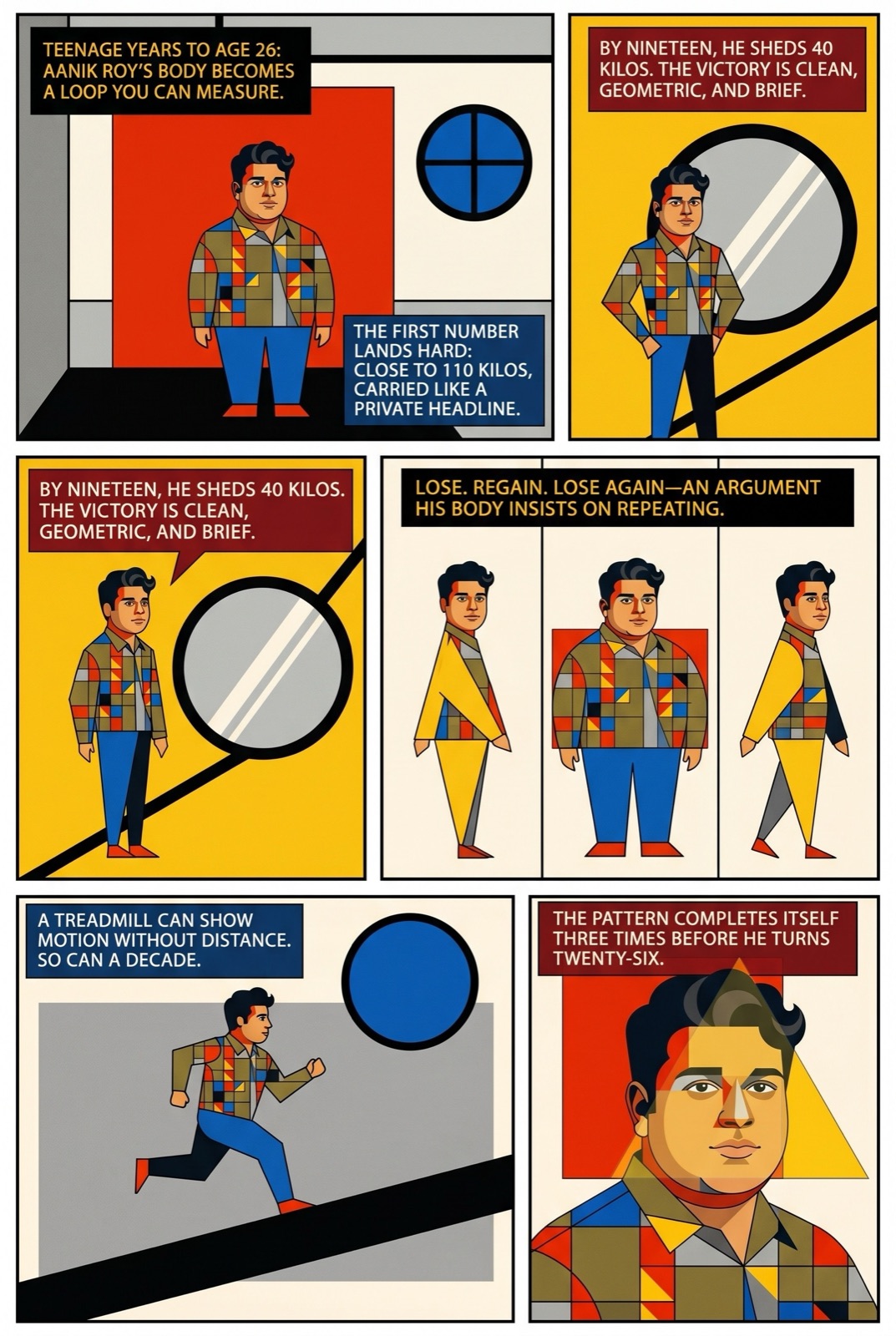
As a teenager, Aanik Roy weighs close to 110 kilos. By nineteen, he has shed forty of them. It feels like winning. It isn't the end — it's the start of a loop that will run three times before he turns twenty-six: lose the weight, gain it back, lose it again.

Every time he tries to climb back, he reaches for the things the shelves call "healthy" — the protein bars, the meal replacements, the bright clean-sounding packs. And every time, the ingredient list contradicts the packaging. The real ingredients hide in the small type. He is, in his own words, a man who hates "being taken advantage of by half-truths."

Aanik doesn't come from money or merchants. "I don't come from a business family," he says. "My dad spent 40 years at the state energy board." He earns an MBA from a top national business school and goes to work — nearly a decade at a giant packaged-goods company, in marketing. The job teaches him something he can't unlearn: exactly how packaged food gets sold, and how the carefully curated omissions are made.

Before he has anything to sell, he starts writing. A blog called PLAINSPEAK — half fitness diary, half industry myth-busting. Readers come for the honesty and stay. They become a community that trusts him first, and his first customers later. The audience is built before the product exists.

In the late 2010s he launches a clean-label food brand. The first name: "And Nothing More." The first product: a protein bar — a handful of honest ingredients, no refined or added sugar, no preservatives, no added flavour. And one non-negotiable rule the giants avoid: every single ingredient, in full, in plain language, printed on the FRONT of the pack. The wrapper itself becomes the argument.

The protein bar finds its people, then the line grows — peanut butter, muesli, dark chocolate. But the mission gets bigger than "nothing more." It isn't only about ingredients anymore; it's about telling the whole truth on everything. So the brand is renamed: Bare. Its stated mission — to rebuild the world's trust in food.

A rebrand could have been a logo swap and a press note. Instead, the company writes — personally — to roughly 20,000 customers, explaining why the name changed. The manifesto isn't a poster on a wall. It's a stack of letters, one per customer, each carrying the same wrapper-honesty the bars do.

Then the brand that was built to call out half-truths gets tested against its own. After a complaint from a competitor, the national food regulator issues a show-cause notice over the "No Added Sugar" claim on its dark chocolate. The brand built on front-of-pack truth now has to answer for its own front of pack.

Roy doesn't spin it. He goes public. The recipe, he explains, hasn't changed — the chocolate is still just two ingredients, mostly cocoa with the rest dates; "our date powder does not behave like added sugar." But he changes the label anyway — from "no added sugar" to "sweetened with dates" — and owns the delay in rolling it out: "That is our mistake." The company submits itself to the same standard it demanded of everyone else.

Honesty turns out to be a business. The brand draws serious backing — a Series B of about $15M led by a marquee venture firm, with angels including a celebrated stock-broking founder, a food-delivery chief, and a quick-commerce restaurateur; a later round led by a European family investor. Revenue climbs to roughly 215 crore in the most recent fiscal year. The same wrapper that started as one bar's promise — every ingredient, on the front, in full — is now the whole company's signature.